Human Rights Dataset
Risk data for human rights due diligence, compliance, and impact assessment
With the rise of mandatory human rights and environmental due diligence (HREDD) laws, the business and human rights (BHR) landscape is becoming increasingly complex for companies, investors, and insurers. To achieve positive outcomes that go beyond mere compliance, it is critical that your supply chain, operational or portfolio risk assessments are underpinned by robust, independent data.
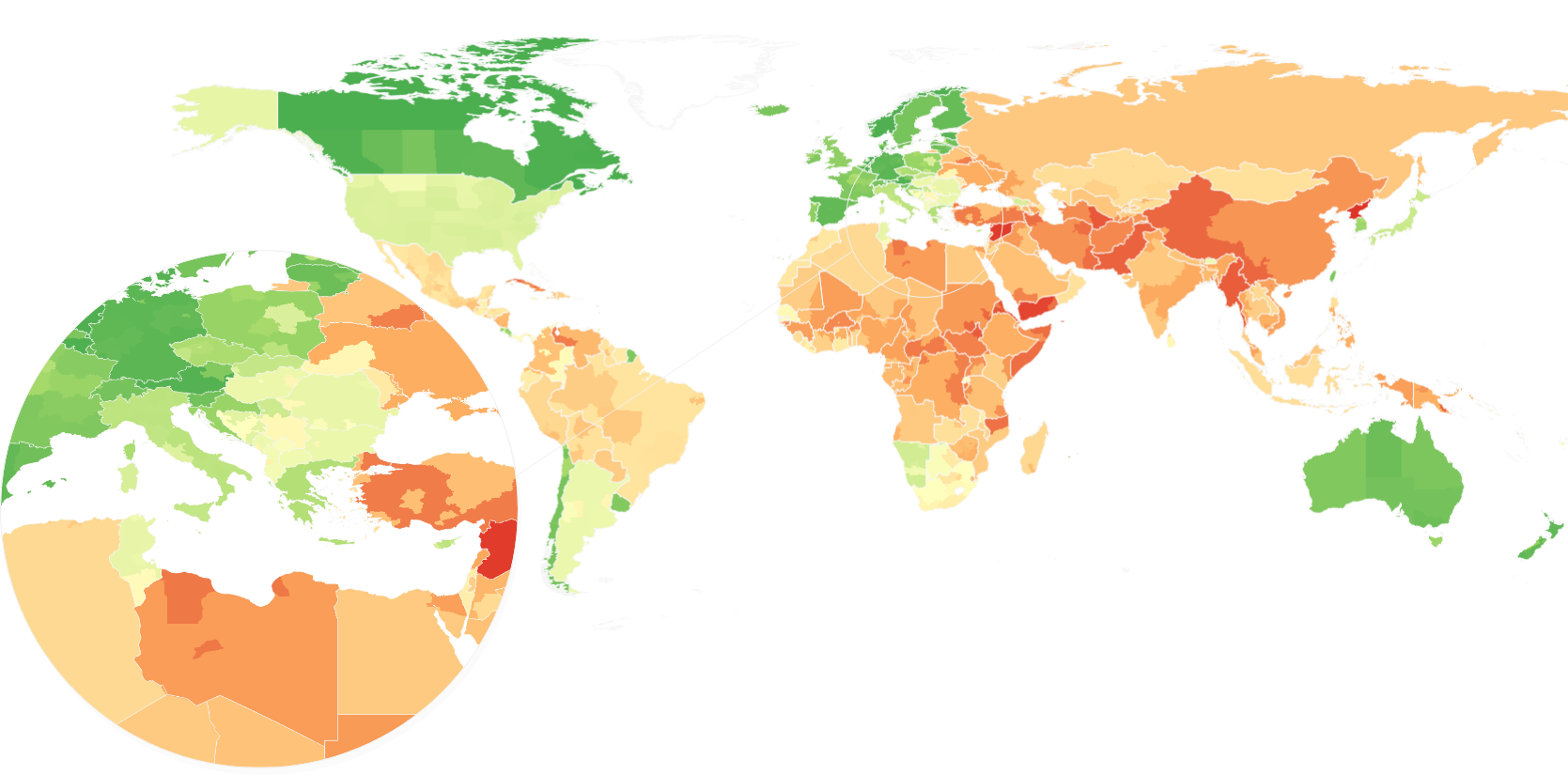
Our human rights risk indices constitute the only structured dataset covering the entire range of labour, civil and political rights for all countries. To enable more granular insight into your risk exposures, our data also features unique subnational data, which allows for the analysis of key rights in over 3000 states and counties worldwide.
These resources have been developed in full alignment with the UN OHCR and the OECD guidelines and are designed specifically to ensure that your due diligence processes are built on granular, credible, and actionable foundations.
Used by leading multinationals across the globe, our indices help:
-
Prioritise
Identify, analyse and prioritise national and subnational human rights risks
-
Process
Drive focused, credible and effective due diligence processes
-
Assess
Conduct granular risk and impact assessments
-
Assure
Provide stakeholder assurance in human rights and modern slavery statements
The data
Our Human Rights Dataset is the only structured set of global risk indices covering the full range of human rights and is widely recognised as the benchmark for excellence in assessing these risks. In addition, Dataset includes indices covering development and health issues to provide a comprehensive approach to all social risks.
198
Countries
34
Indices
40%
Subnational
Example issues include:
Human rights
Labour rights
Child labour, Modern slavery, Working conditions, Migrant labourCivil & political rights
Freedom of speech, Privacy, Land rights, Indigenous peoplesHuman security
Arbitrary arrest, Extrajudicial killings, Security forcesAccess to remedy
JudicialDevelopment
Human development
Poverty, Education, HealthHealth threats
PandemicsInterconnected factors in other datasets: Political risk, Democratic governance, Civil unrest, Conflict, Climate risk, Food security, Drought
Want to learn about the deeper levels of the indices, the methodology or how they can help you?
Benefits

Benefits
Simple
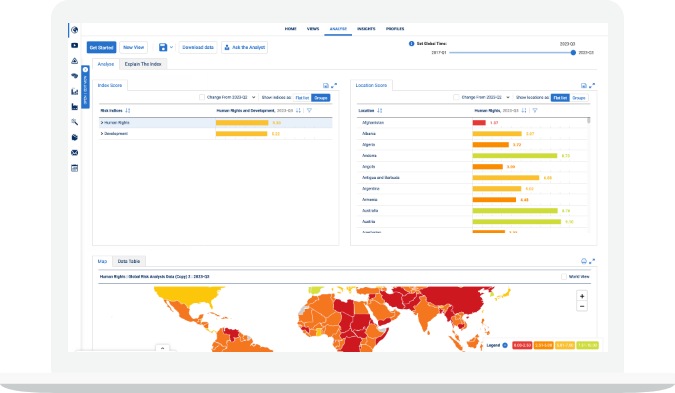
Easily identify and analyse risks across the full spectrum of civil, political and labour rights issues through our GRiD platform and data, or integrate into internal systems via our API
Credible
Our reputation as the world’s leading provider of global risk analytics offers you the confidence and accuracy you need to make critical decisions based on data you can trust
Consistent
All our indices use the same comparable scale, helping you identify, prioritise and compare risks across more than 190+ environmental, political, social and economic issues
Features
Advanced analytics
Created using a unique combination of data modelling, event tracking and expert judgement by our analysts to ensure the highest degree of accuracy

Granular
Location scores and interactive maps identify risks at both national and subnational levels across the globe, enabling deeper analysis and more targeted risk prioritisation
Transparent
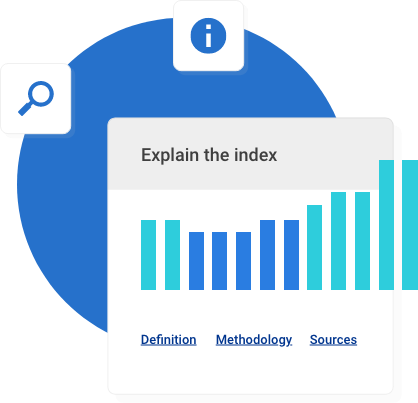
Detailed index definitions, methodologies and source information are fully available
Drive your human rights due diligence with our world-leading risk data
Related content
Capabilities
German Supply Chain Act
World-leading LkSG Risk Analysis Dataset, guidance and expert support for compliance with Supply Chain Act risk analysis and due diligence requirements