Economic Risk Data
Assessing the global business environment
Economic stability, financial controls, external debt and growth all constitute essential levers in the ability of a country to attract investment, minimise political unrest and navigate the energy transition. Used in combination with our ESG and political risk analytics, our Economic Risk Data enables organisations to track these issues within a consistent scoring framework as part of a holistic approach to monitoring the global risk landscape.
From trade barriers and labour costs, to financial crime and external debt, our Economic Risk Data offers an accessible and accurate view of the key macroeconomic and business environment issues that can influence the success of an organisation in a country and ensure the political stability needed to offer certainty in investment decisions and the operational environment.
Used by leading multinationals across the globe, our indices help:
-
Contextualise
Contextualise a country’s macroeconomic performance against its peers
-
Assess
Assess the characteristics of the country’s economy to determine the viability for market entry
-
Measure
Measure key indicators across labour costs and human capital
The data
Our Economic Risk Data enables organisations to contextualise a country’s economic performance and better understand the business environment for existing operations and new country entry.
198
Countries
27
Indices
4%
Subnational
Example issues include:
Economy
Economic growth
External debt burden
Access to foreign capital
Dependence on commodity exports
Dependence on fossil fuel imports
Business
Infrastructure
Barriers to entry
Human capital
Labour costs
Digital inclusion
Interconnected factors in other datasets: Poverty, Education, Political risk, Civil unrest, Food security, Energy security, Regulatory frameworks
Want to learn about the deeper levels of the indices, the methodology or how they can help you?
Benefits

Benefits
Convenient
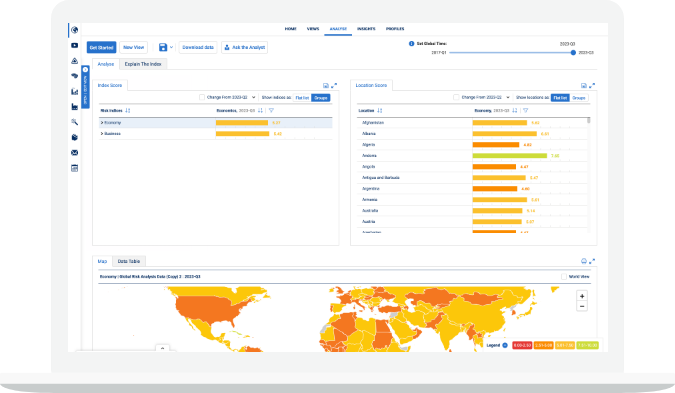
Easily identify and analyse threats across the full spectrum of economic and business risks through our GRiD platform and data, or integrate into internal systems via our API
Credible
Our reputation as the world’s leading provider of global risk analytics offers you the confidence and accuracy you need to make critical decisions based on data you can trust
Consistent
All our indices use the same comparable scale, helping you identify, prioritise and compare risks across more than 190+ environmental, political, social and economic issues
Features
Advanced analytics
Created using a unique combination of data modelling, market tracking and expert judgement by our analysts to ensure the highest degree of accuracy

Transparent
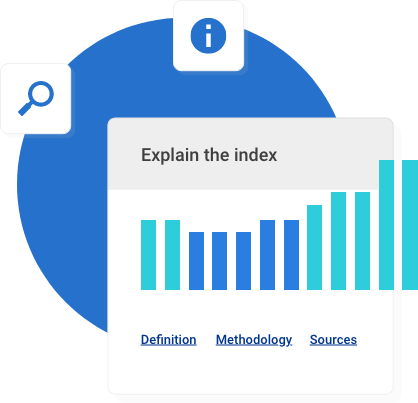
Detailed index definitions, methodologies and source information are fully available
Granular
Location scores and interactive maps identify risks at both national and subnational levels across the globe, enabling deeper analysis and more targeted risk prioritisation
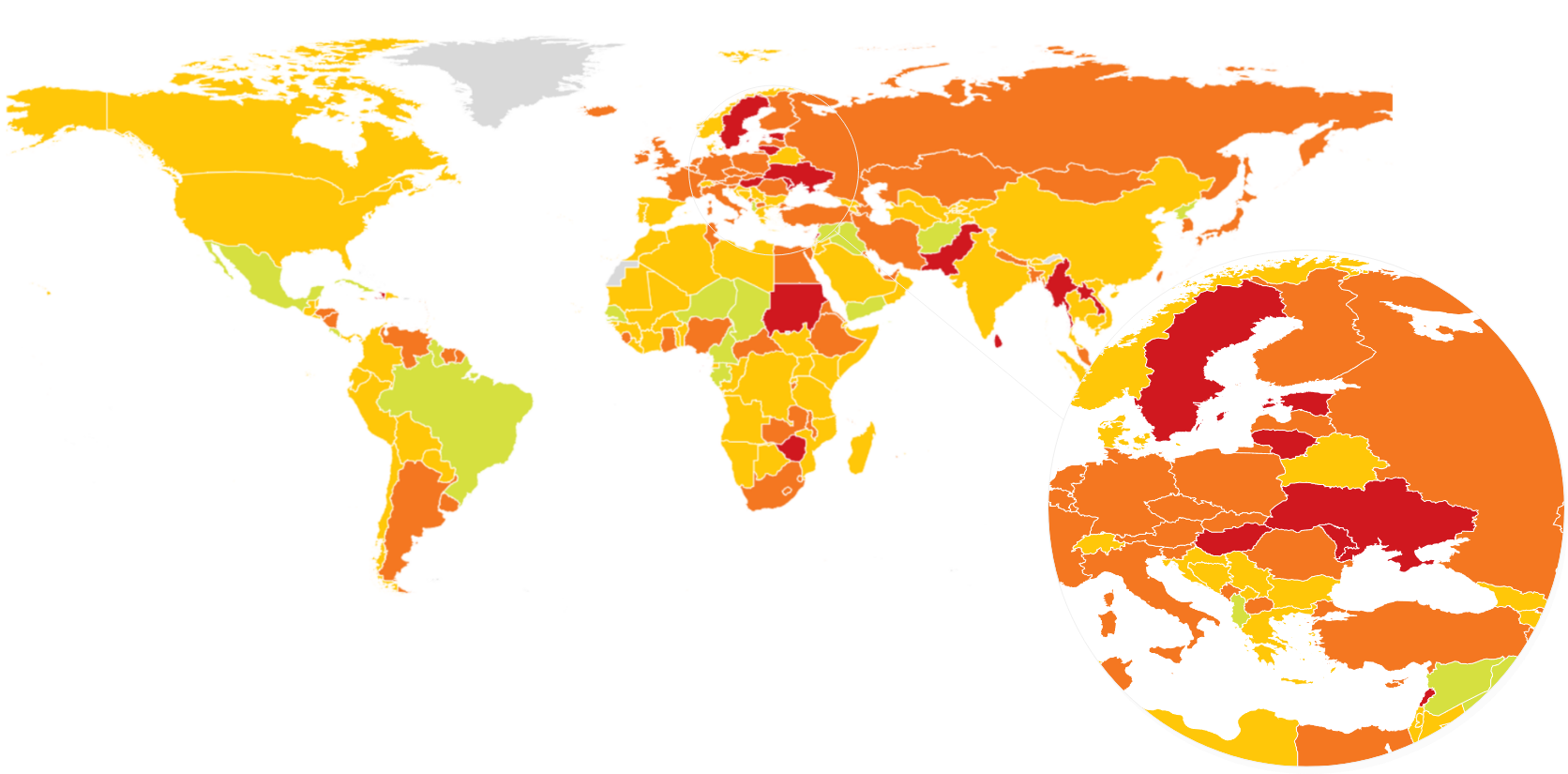
Put economic performance in context alongside the full range of political, environmental and human rights risks