New BRICs study reveals China and India’s rising economic integration with oil and mineral rich nations
25/11/2010
Major oil producers and mineral rich countries have been ranked as ‘extreme’ and ‘high’ integration in a new BRICs study evaluating the extent of economic integration of Brazil, Russia, India, China and South Africa in the global economy. Research highlights the economic integration of 176 countries with China.
Amongst those countries most integrated with China are key commodity producers such as Sudan (4), Yemen (5), Kazakhstan (6), Mongolia (7), Congo (8), Australia (11), Papua New Guinea (13), Malaysia (16), DR Congo (18) and Peru (20).
The China Integration Index (CII) is one of a set of five sub-indices that comprise the composite Emerging Powers Integration Index (EPII), which assesses the level of economic integration between Brazil, Russia, India, China and South Africa, and countries around the world. Together the influence of these economies is significant, given that the economies of Brazil, Russia, India and China have contributed over a third of world GDP growth over the past ten years.1
The indices are calculated by evaluating the value of a country’s exports to each emerging power as a percentage of its total exports and its gross domestic product (GDP). The same calculation is made for a country’s imports and for its inward direct investment from the emerging powers.
Countries showing ‘extreme’ or ‘high’ integration with China and the other emerging powers face a number of associated potential opportunities and risks. Growing trade and investment with the emerging powers has the potential to boost developing economies, contribute technology, skills, revenues and employment.
However, overreliance may put an economy at risk of a hard-landing should the emerging power reduce trade or pull out investments. In the developing world, less stringent and poorly implemented labour and environmental regulation, combined with poor corporate governance standards of BRIC companies, mean there is greater risk of labour and human rights violations.
Western businesses investing in countries highly integrated with the emerging powers may face added competition. Emerging power governments frequently offer loans and assistance to facilitate investment deals, and have more limited requirements in terms of good governance.
The new study shows that China’s demand for energy and raw materials is a key driving force behind its integration with countries around the world. Similarly, major energy and mineral suppliers rank amongst those most highly integrated with India, including oil producers United Arab Emirates (2), Nigeria (7), Saudi Arabia (8) and Yemen (11). The BRICs as a whole account for around 18% of global oil demand.
The China Integration Index also shows that China’s integration with some key producers, including Azerbaijan, Ecuador, Saudi Arabia, Botswana and Bolivia, has also increased compared with the 2010/2009 edition of the index. Similarly, India’s integration with key producers, including Saudi Arabia, Azerbaijan, Nigeria, South Africa and Peru has also increased.
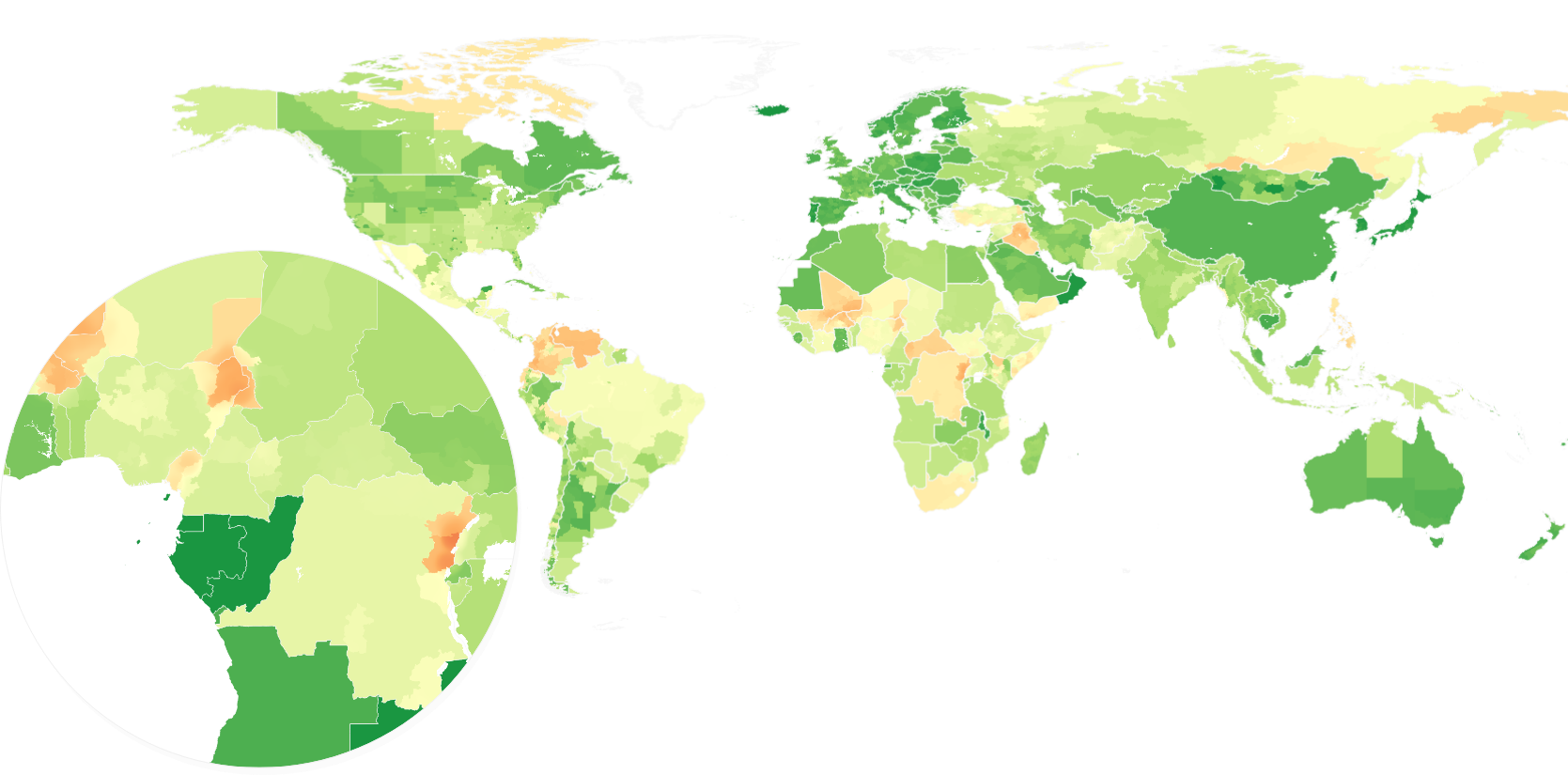
China Integration Index 2011
| Legend | |
|---|---|
| Extreme risk | |
| High risk | |
| Medium risk | |
| Low risk | |
| No Data | |
| Rank | Country | Rating |
|---|---|---|
| 1 | Hong Kong (China) | Extreme |
| 2 | Macao (China) | Extreme |
| 3 | Singapore | Extreme |
| 4 | Sudan | Extreme |
| 5 | Yemen | Extreme |
| Rank | Country | Rating |
|---|---|---|
| 6 | Kazakhstan | Extreme |
| 7 | Mongolia | Extreme |
| 8 | Congo | Extreme |
| 9 | Berlin | Extreme |
| 10 | Laos | High |
The China Integration Index is part of the Maplecroft emerging powers series. It is a composite of world trade and foreign direct investment data to gauge the extent of the economic relationships China has with other countries.
© Maplecroft, 2010
The growing presence of the emerging powers in Saudi Arabia presents a potential challenge to established western interests in the country. China’s no-questions-asked approach to investment overseas may be attractive to Saudi Arabia, who in the past, has been chastised by the US for allegedly financing terrorism, a charge denied by the Saudi government. Furthermore, China may have increasing leverage over western rivals in Saudi Arabia, since their concerns over long-term security of supply are compatible with Saudi’s concerns over long-term security of demand as western economies try to reduce reliance on oil.
As part of their efforts to secure resources for industralisation, China and India have also been looking to emerging oil and mineral producers, as well as more established ones. Maplecroft’s indices show that India and India’s integration with emerging producers such as Ghana, Namibia, Madagascar and Uganda has increased. With good governance in place, growing integration could have positive economic implications for these countries. Indeed, Uganda and Ghana have taken steps to ensure they make the most of their resource wealth.
Ensuring reliable and adequate supply of energy and raw materials is crucial to ensuring continued economic growth of China and India. Both escaped the global financial crisis relatively unscathed, and are expected to contribute significantly to global growth in the future. While IMF data shows that the advanced economies declined by an average of 3.2% in 2009, China’s economy grew by over 9% in 2009 and India’s by 5.7%.
By contrast, Russia’s economy was significantly affected by the global crisis, contracting by 7.9% in 2009, due to lower demand for higher priced gas. Reflecting the earlier stages of the crisis, Maplecroft’s Russia Integration Index shows that on average, a country’s integration with Russia has decreased compared to the 2010/2009 edition of the index. Russia’s neighbours were most affected by this - Russian integration with Eastern Europe and Central Asian countries dropped by 1.84 index points.
Russia’s weakness in its neighbourhood may present greater opportunities for Chinese companies to gain influence in terms of investment opportunities in strategically important energy and mineral rich areas, such as Central Asia.
By contrast, Brazil, although like Russia a key commodity exporter, has a much more diversified economy. In combination with a governmental stimulus package that support its key export and productive industries, this meant that it did not suffer so extensively as a result of the global crisis. Furthermore, Brazilian companies are becoming increasingly active on the international stage. As such, Maplecroft’s Brazil Integration Index shows that, on average, a country’s integration with Brazil has increased compared to the previous edition of the index.
Maplecroft analyst, Rebecca Jackson, says: “For the developing world, there are both opportunities and risks associated with the rising economic clout of the emerging powers. While the potential economic benefits are significant, poor corporate governance standards by BRIC companies has led to growing hostility towards the emerging powers in countries such as Zambia, Angola, Namibia and Mozambique.”
Chairman of Goldman Sachs Asset Management, Jim O’Neill said: “In many parts of the world, quite rightly, the financial crisis is viewed not as a global crisis, but a North Atlantic one. The BRICs, specifically China and IIndia, have not only been largely insulated from the crisis, but demand in these countries is playing a crucial role in driving global recovery. Maplecroft’s indices are crucial in illustrating to business the impact of rising demand in the BRICs on patterns of international economic relations. “
China’s rising integration with established and emerging energy and mineral producers
| 2011 | 2010 | |||
|---|---|---|---|---|
| Category | Score | Category | Score | |
| Tanzania | High | 2.99 | High | 3.6 |
| South Africa | High | 3.01 | High | 3.56 |
| Saudi Arabia | High | 3.04 | Medium | 5.29 |
| Madagascar | High | 3.78 | High | 4.4 |
| Ecuador | High | 4.32 | Medium | 6.68 |
| Namibia | High | 4.38 | Medium | 5.17 |
| Botswana | High | 4.39 | Medium | 5.84 |
| Ghana | High | 4.49 | Medium | 5.67 |
| Bolivia | Medium | 5.32 | Medium | 5.99 |
| Azerbaijan | Medium | 5.58 | Low | 8.06 |
| 10=greater integration, 0=lower integration | ||||
1 Goldman Sachs, 2003. Dreaming with the BRICs: The Path to 2050
Email info@maplecroft.com for more information or call +44 (0)1225 420000.
Register for trial access to see examples of Maplecroft's indices, interactive maps, scorecards, briefings and in-depth reports.
Latest News
Further information
-
- For more information contact:
-
Jason McGeown
Head of Media Relations
Tel: +44 (0)1225 420000 - jason.mcgeown@maplecroft.com